tiket.com · 2024 · 2 months
CS Ticket Tracker, How we build our CS Ticket Tracker on tiket.com
Product Designer
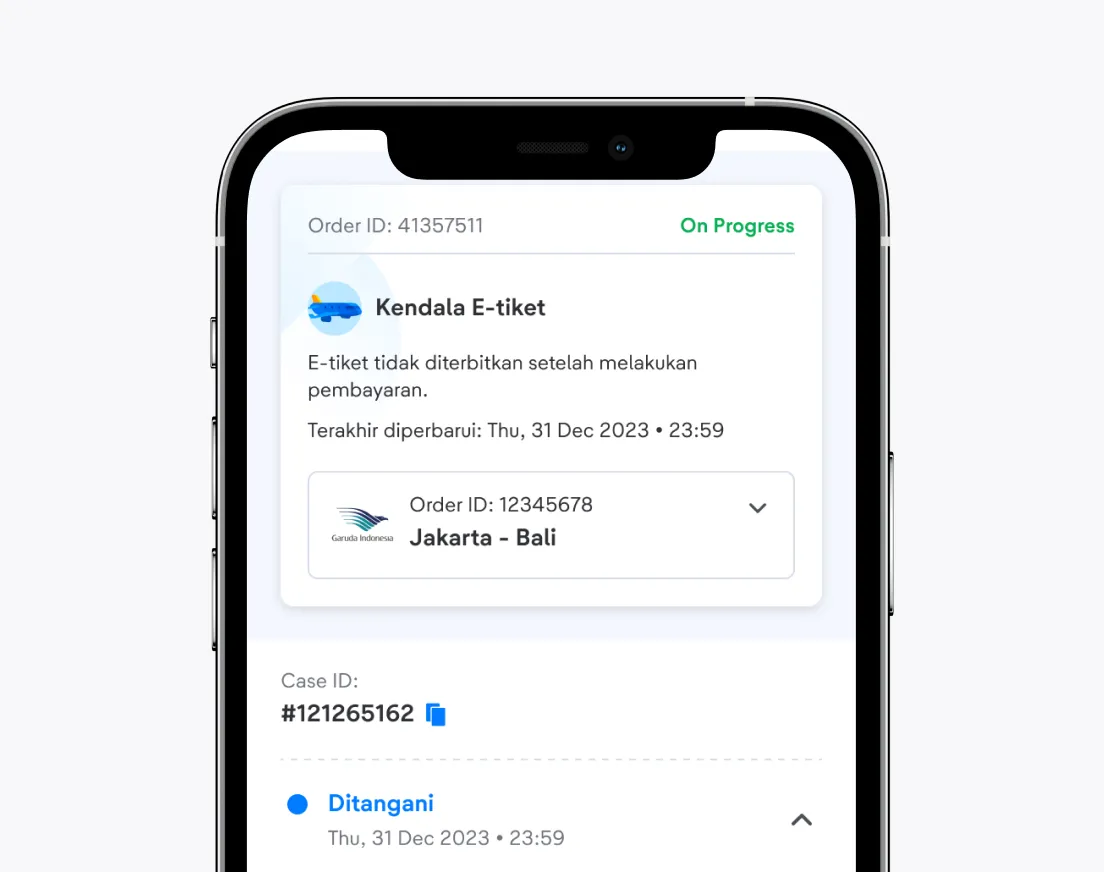
Background
At tiket.com, the Customer Support (CS) team handles approximately 68K+ cases per month, spanning complaints, inquiries, and requests.
A significant portion of users repeatedly reach out to CS just to ask for updates on their cases, creating unnecessary load on agents and friction in the user experience.
From internal data:
- ~3,098 users requested updates on their cases within 3 months
- 45% of users had more than 4 interactions with CS
- The highest repeated interaction group reached 1,421 users
- Only 23% of these cases were resolved at L1, while 77% required escalation to L2
This indicates a gap not in resolution, but in visibility and communication.
Problem
When disruptions happen, users don’t perceive them as internal operational issues. They experience:
- Uncertainty (no clarity on progress)
- Lack of control (unable to track their case)
- Decreased trust (feels like their issue is ignored)
On the business side:
- High volume of repeat inquiries increases CS workload
- Inefficient handling due to unnecessary follow-ups
- Limited automation capability due to system constraints (Salesforce only supports certain case types)
Core problem: Users rely too heavily on CS agents for updates due to lack of self-service visibility.
Goal
Design a system that:
- Provides clear CS ticket status visibility for users
- Reduces repeat inquiries and dependency on agents
- Aligns with company OKRs by improving efficiency and user experience
Gathering intentions
We also collect intentions from business and product stakeholders so that we can align with the company’s vision, while we get the user’s intention by analysing research data.
Flow
CS Ticket Flow & Hierarchy, Based on function & urgency.
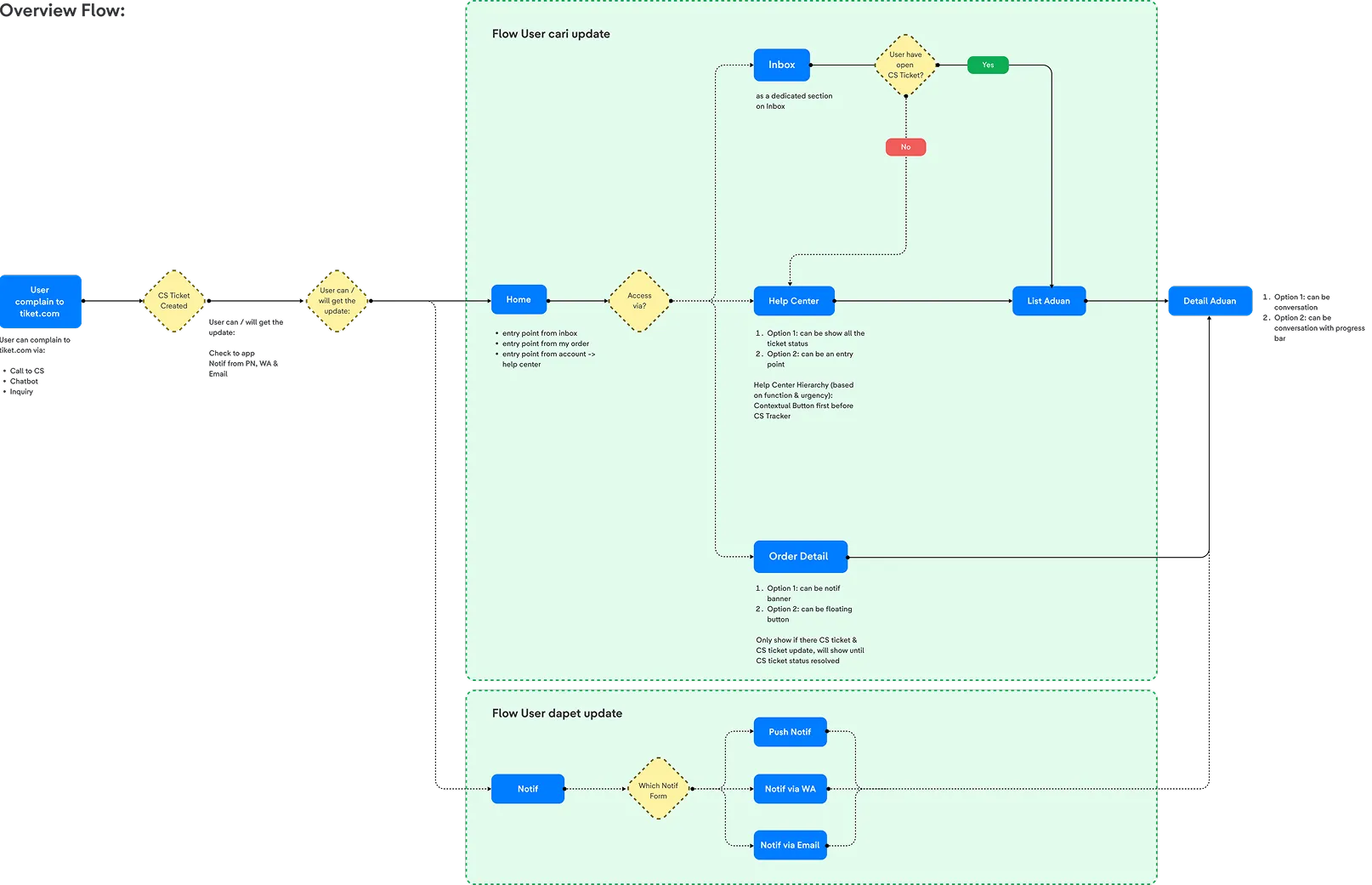
Solution
We introduced a CS Ticket Tracking experience within the Help Center that allows users to:
- View real-time ticket status
- Understand what stage their case is in
- Get contextual information without contacting agents
- Be guided to the right next action (wait, follow up, or escalate)
Additionally:
- Standardized ticket visibility across channels (email, WhatsApp, etc.)
- Leveraged automation where possible within system limitations
- Designed flows that connect users directly to L2 when necessary
Impact Focus
This solution aims to shift:
- From reactive support → proactive information
- From high-touch → scalable experience
- From agent-dependent → user-empowered journey
Success Metrics
1. Feature Adoption & Experience
- User satisfaction (CSAT / surveys)
- CVR to CS ticket detail page
- % of users utilizing ticket tracking
2. Operational Efficiency
- Reduce users with >4 interactions by 25%
- Decrease inbound requests asking for updates
- Improve SLA adherence rate
3. Behavioral Shift
- Lower CVR to “Contact Us” after SLA is communicated
- Increased reliance on self-service instead of agents
Outcome (Optional if you want to add later)
You can later plug:
- % reduction in CS load
- Improvement in CSAT
- Drop in repeated inquiries